
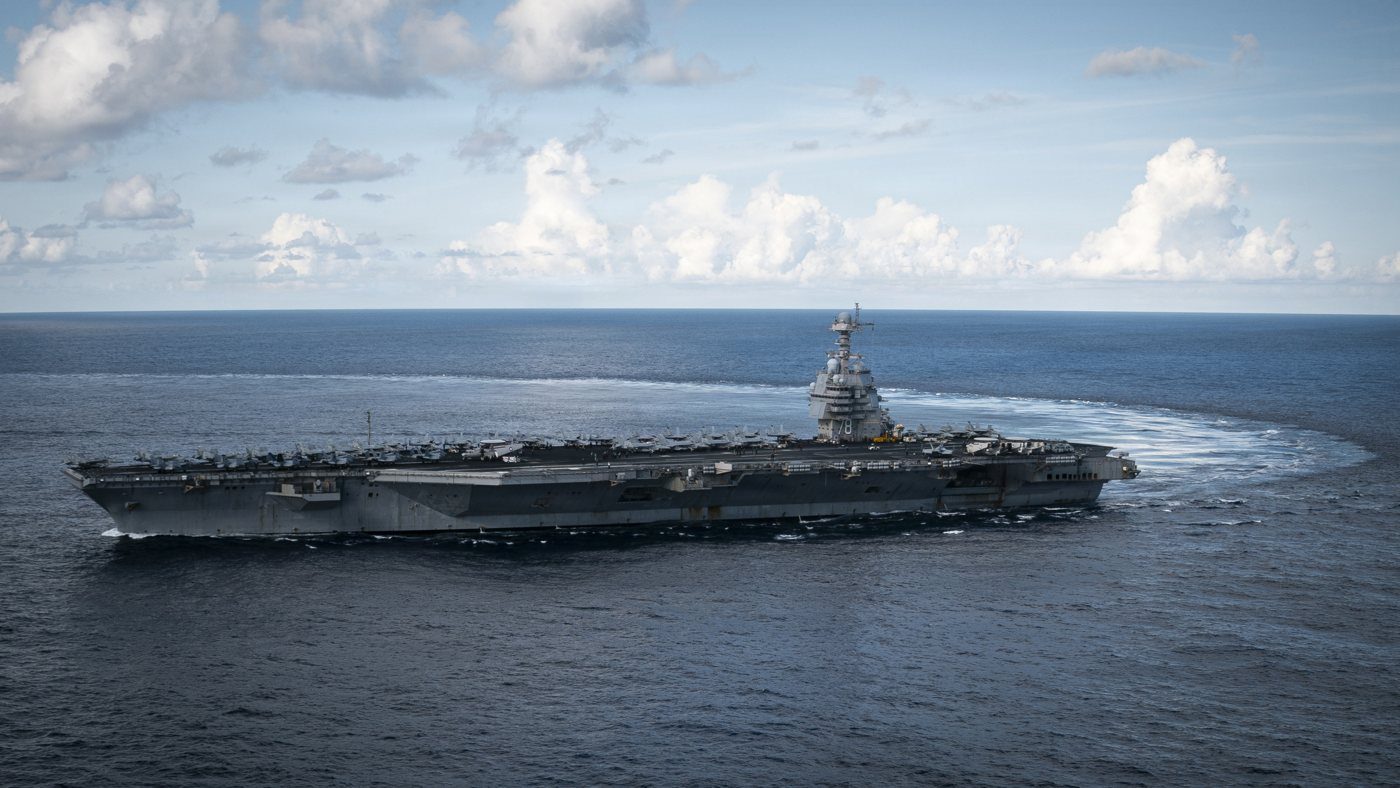
Gerald R. Ford class (CVN 78)
Nuclear aircraft carrierIn serviceFielded 2017Pending verification
Also known as: CVN 78
Naval ForcesUSA
Fact cardConfidence · Source
System
TypeNuclear aircraft carrier
Alternative designationsCVN 78
Date of introduction2017
ProliferationOrigin country only
Dimensions and weight
Propulsion and performance
Armament
Weapons and payload options · 4Confidence · Source
Carrier air wingStrike, air defense, ISR
High[1]- Quantity
- 75+ aircraft
Rolling Airframe MissilePoint defense
High[1]CIWSClose-in weapon system
High[1]Nuclear-powered aircraft carrier class succeeding the Nimitz class; CVN 78 in service, CVN 79–81 under construction.
Draft entry. Values come from the cited public sources and are awaiting editor verification.
- Aircraft Carriers (CVN), U.S. Navy Fact Files
Published/updated 2021-11-12 · Tier 1 · checked 2026-10-03 - Evolved Seasparrow Missile Block 1 (RIM-162D), U.S. Navy Fact Files
Published/updated 2022-10-21 · Tier 1 · checked 2026-10-03
- 2026-10-03 Initial draft entry from cited open sources
- 2026-10-03 Added payload options and capabilities
- 2026-10-04 Added photo (Public domain)