
Fateh-110
Close-range ballistic missileFielded 2002Pending verification
Also known as: NP-110
Missile ForcesIRN
Fact cardConfidence · Source
System
TypeClose-range ballistic missile
Alternative designationsNP-110
Date of introduction2002
ProliferationAt least 3 countries
Dimensions and weight
Flight performance
Payload and range
Fire control
Variants
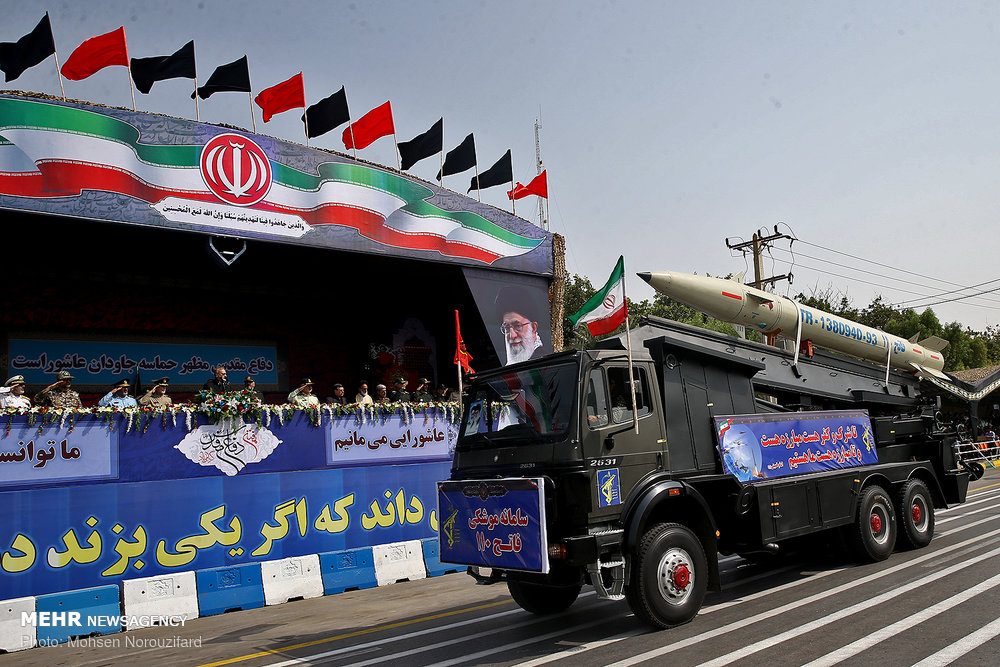
The Fateh-110/IHas a maximum range of 200km (124 miles), and can carry a 650kg payload. It was declared operational in 2002.[1]
The Fateh-110/IIHas a range of 250km (155 miles), a payload of 450kg. Iran announced the development of this variant in 2004.[1]
The Fateh-110/IIIWas announced in 2010 and designed to have more accuracy and a quicker launch time. It has a range of 300km, can carry a 650kgpayload.[1]
The Fateh-110/IVDeveloped in 2012 and is designed to have precision targeting and has a guidance system. It also has a range of 300km, can carry a 650kg payload.[1]
ZolfagharOn September 25, 2016, Iranian Defense Minister Hossein Dehghan announced that Iran’s new Zolfaghar ballistic missile, a Fateh-110 variant, has a potential range of 700 km.[1]
Fateh-110 Anti-Ship VariantsIn 2014, the IRGC displayed two variants of the Fateh missile it called the Hormuz-1 and Hormuz-2. The Hormuz-1 is claimed to have anti-radiation capabilities for attacking radar systems, and in 2014, Iranian television broadcast images of commanders watching…[1]
Hezbollah and Houthi Proliferation. Prompted by its experience in the war with Iraq in the 1980s, Iran actively pursued a ballistic missile arsenal that had greater precision and accuracy.
Draft entry. Values come from the cited public sources and are awaiting editor verification.
- Fateh-110 Iranian Close-Range Ballistic Missile, U.S. Army TRADOC G-2 Worldwide Equipment Guide (ODIN)
Published/updated 2026-03-20 · Tier 1 · checked 2026-10-10
- 2026-10-10 Entry created from the Worldwide Equipment Guide (ODIN), bulk import
- 2026-10-10 Added photo (CC BY 4.0)